Collective Healing Workshops for Children in Kurdish Provinces: Bringing Our Voices Together
Date: November 2024
Location: Nusaybin, Mardin
Project Team: Siyabend Aslan (Project Coordinator), Abdulsamet Doğan (Mental Health Professional / Social Worker), Mehmet Ali Vural (Mental Health Professional / Social Worker), Mahsum Aslan (Social Worker)
Brief Summary
Within the scope of this project which was coordinated by psychologist Siyabend Aslan, collective healing workshops were organized over two consecutive weekends to support children aged 12–15 living in Nusaybin in coping with the traumatic effects of grave human rights violations and conflict periods.
Twenty-five children who were determined with the support of school guidance counselors and Eğitim-Sen participated in art therapy sessions, emotional expression exercises, empathy-based games, and solidarity activities conducted in a hotel selected as a safe space.
By the end of the program, noticeable progress was observed in the children’s expressive skills, self-confidence, social communication, and capacity for cooperation within a group setting. The multilingual approach (Turkish and Kurdish) enabled children to express themselves more comfortably and strengthened their sense of trust. The workshops concluded with high motivation, strong participation, and a clearly observable experience of emotional relief and collective healing.
Why Is It Important?
Nusaybin and its surrounding region have long been marked by grave human rights violations, security operations, and post-conflict trauma. These conditions deeply affect children’s emotional regulation capacities, sense of safety, and ability to establish healthy social relationships.
The project responded directly to this need by aiming to strengthen psychological resilience while creating a community-based space for healing.
The workshops placed restorative justice principles at the center. Priority was given to ensuring that children’s voices were heard, their emotions recognized, their cultural identities honored through mother-tongue expression, and their individual traumas processed within a framework of collective support.
These elements prevented isolation, while strengthening solidarity, belonging, and the sense of healing together. For this reason, the project functioned not only as individual psychosocial support, but as an important step toward broader social healing.
What Was Done?
Preparation Phase:
Two preliminary field visits were conducted in Nusaybin to identify a secure venue. It was decided that the workshops would take place in a child-friendly hotel environment. Participants were identified through school guidance counselors and Eğitim-Sen. The workshop content was designed collaboratively with psychologists and social workers. All necessary materials for art therapy, games, emotional expression cards, and collective creative activities were prepared in advance.
Implementation:
The workshops were conducted over four days between 09:00 and 16:00. Children were safely transported to the venue by shuttle service. Multilingual expression (Turkish/Kurdish) was supported throughout the process. Clear improvements were recorded in participation levels, cooperation skills, emotional expression, and social interaction.
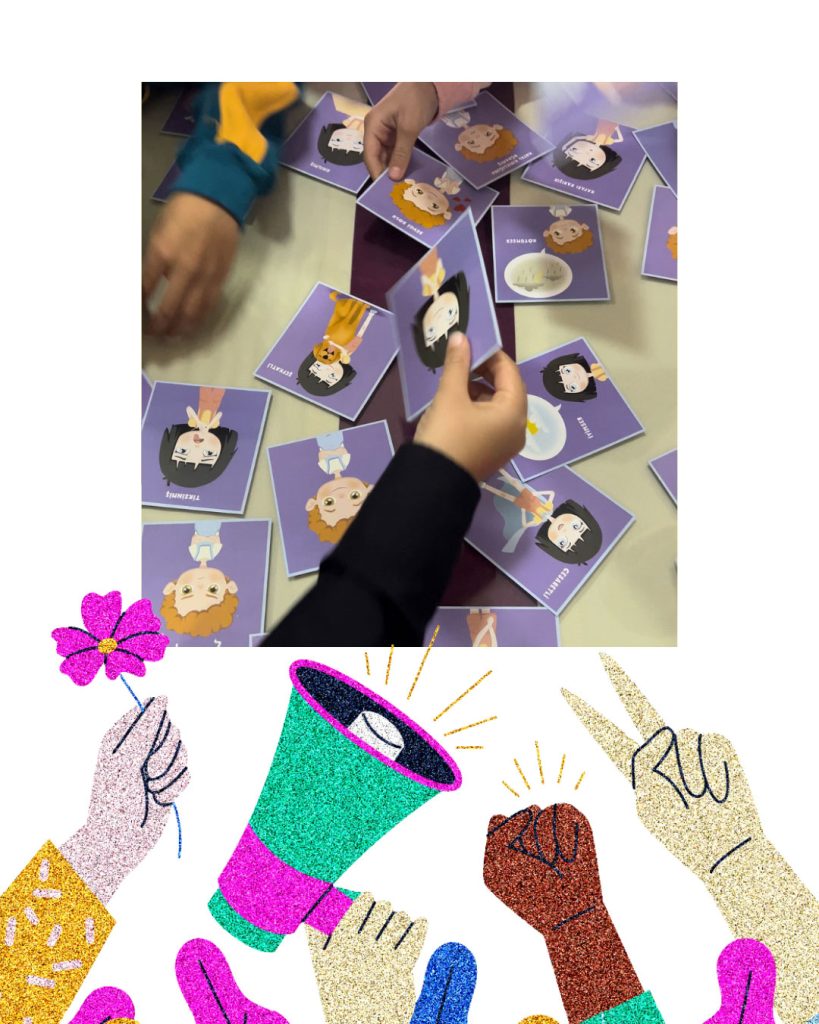
- First Weekend: Icebreaker games, safe-space building exercises, emotion cards, empathy games, collaborative art activities, and a wish tree exercise.
- Second Weekend: Art therapy sessions, solidarity-based games, collective story writing, screening of a short film focused on emotional expression followed by discussion.
Evaluation and Closing:
The program concluded with a “learning tree” activity. According to expert observations, the most significant impact was seen in increased trust, improved expressive capacity, and strengthened group solidarity. The most frequent request expressed by participants was continuation of workshops.
Visual / Multimedia Section
- Photographs from the workshops- Atölyeden fotoğraflar ve videolar.
- Video recordings from workshop activities